
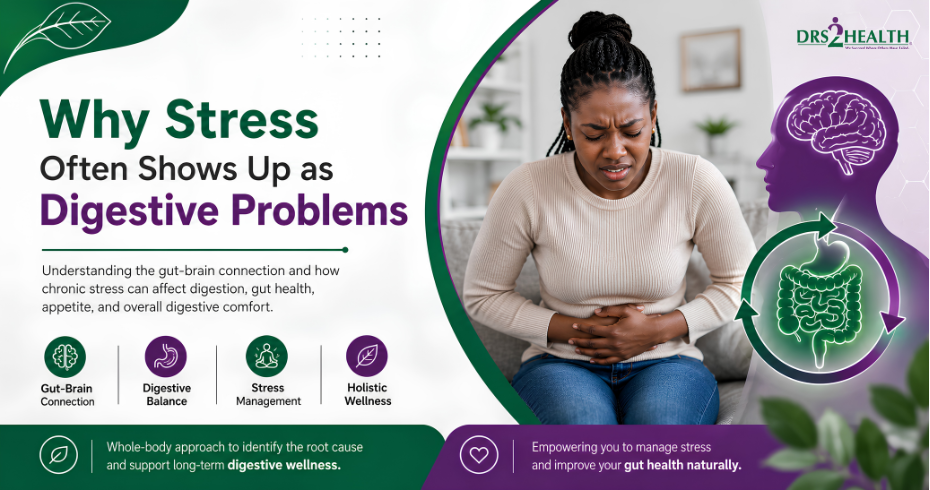
Stress can affect more than emotional well-being. It can also influence digestion, gut health, appetite, and overall digestive comfort. Many people experience symptoms such as bloating, nausea, stomach pain, constipation, or appetite changes during periods of ongoing stress.
This happens because the digestive system and nervous system are closely connected through the gut-brain connection. When stress becomes chronic, the body’s stress response may affect how digestion functions and how the digestive system feels day to day.
At DRS2HEALTH, we commonly see digestive symptoms appear alongside stress, poor sleep, emotional exhaustion, and nervous system overload. Understanding this relationship can help people better recognize how chronic stress may be affecting their overall well-being.
The Connection Between Stress and Digestion
The digestive system and nervous system constantly communicate with each other through what is commonly known as the gut-brain connection. This communication plays an important role in how digestion functions throughout the day.
During stressful situations, the body activates its fight-or-flight response. This natural response helps the body react during moments of pressure or danger. However, when stress becomes ongoing, the nervous system can remain in a heightened state for long periods of time.
As a result, digestion may begin functioning differently. Some people notice increased stomach sensitivity, bloating, irregular digestion, nausea, or appetite changes during stressful periods.
Research from organizations such as Harvard Health Publishing and the National Institutes of Health has also explored the relationship between stress, inflammation, digestion, and the gut-brain axis.
Digestive Symptoms Stress Can Trigger
Stress affects people differently. While some individuals experience occasional digestive discomfort during stressful situations, others notice more persistent physical symptoms over time.
Stress and Stomach Pain
Periods of emotional stress can increase muscle tension and sensitivity throughout the digestive system. Some people experience cramping, stomach discomfort, or abdominal pain during periods of anxiety, pressure, or emotional overwhelm.
In many cases, symptoms may fluctuate depending on stress levels, sleep quality, and daily lifestyle habits.
Stress and Bloating
Bloating is another digestive symptom commonly associated with stress. Ongoing stress can influence digestion speed, eating habits, nervous system balance, and overall gut function.
We often see bloating become more noticeable when stress is combined with irregular eating patterns, poor sleep, or ongoing mental fatigue.
Stress and Nausea
Stress may also contribute to feelings of nausea or digestive uneasiness. During heightened stress responses, the body redirects energy away from digestion and toward survival functions, which can sometimes create physical sensations in the stomach.
For some individuals, nausea may appear before stressful situations, during emotionally demanding periods, or alongside anxiety-related symptoms.
Stress and Constipation
Chronic stress can sometimes slow digestive function and affect regular bowel movements. Changes in hydration, sleep patterns, eating schedules, and physical activity during stressful periods may also contribute to constipation or digestive irregularity.
Digestive symptoms linked to stress are often influenced by multiple overlapping lifestyle and nervous system factors rather than a single cause alone.
Appetite Changes During Stress
Stress can affect appetite in different ways. Some people lose interest in eating during stressful periods, while others notice cravings, emotional eating patterns, or changes in eating habits throughout the day.
Over time, these patterns may influence digestion, energy levels, and overall wellness.
Why Chronic Stress Can Affect Gut Health Over Time
Occasional stress is a normal part of life. However, long-term stress may place ongoing strain on the nervous system and overall digestive health.
Over time, chronic stress may affect:
- digestion and nutrient absorption
- sleep quality
- inflammation levels
- energy and fatigue patterns
- gut microbiome balance
- eating behaviors and lifestyle habits
Many people experiencing chronic stress also report overlapping symptoms such as fatigue, brain fog, muscle tension, headaches, disrupted sleep, and digestive discomfort occurring together.
Rather than existing separately, these symptoms are often connected through broader nervous system and lifestyle patterns. This is one reason why stress-related digestive symptoms can sometimes feel unpredictable or difficult to manage without addressing overall wellness habits and contributing stressors.
What We Commonly See in Patients Experiencing Stress-Related Digestive Issues
At DRS2HEALTH, we frequently see digestive symptoms appear alongside chronic stress, emotional exhaustion, disrupted sleep, and ongoing lifestyle strain.
Some patients experience symptoms that come and go depending on stress levels, while others notice digestive discomfort becoming more persistent during demanding periods of life.
In many cases, digestive symptoms are not isolated concerns. We often observe overlapping patterns involving:
- fatigue and low energy
- sleep disruption
- nervous system overload
- increased physical tension
- emotional stress
- irregular eating habits
- burnout-related exhaustion
Every individual experiences stress differently, which is why digestive symptoms can vary significantly from person to person. This is also why a more personalized and whole-body approach to wellness can be valuable when exploring long-term digestive health concerns.
If you are exploring additional information about natural treatment for digestive disorders, a personalized wellness approach may help address contributing lifestyle and stress-related factors affecting digestive health.
A Holistic Approach to Stress and Digestive Wellness
Supporting digestive health often involves looking beyond symptoms alone and considering how stress, sleep, nutrition, lifestyle habits, and nervous system health may be affecting the body overall.
A holistic wellness approach may include:
- nutritional support
- stress management strategies
- nervous system regulation
- acupuncture
- lifestyle modifications
- sleep support
- personalized wellness planning
Rather than focusing only on temporary symptom relief, integrative care approaches often aim to better understand the broader patterns contributing to digestive discomfort and overall well-being.
At DRS2HEALTH, naturopathic and holistic care focuses on supporting long-term wellness through individualized and patient-centered care provided by experienced naturopathic doctors NYC patients trust for whole-body wellness support.
Daily Habits That May Support Digestive Wellness
Small daily habits can sometimes make a meaningful difference in supporting digestive wellness during stressful periods.
Helpful wellness habits may include:
- maintaining more consistent sleep routines
- staying hydrated throughout the day
- practicing mindful eating habits
- reducing ongoing overwhelm where possible
- supporting stress management and relaxation
- prioritizing movement and restorative activities
- creating healthier work-life balance patterns
Because stress affects people differently, supportive wellness strategies should also be individualized whenever possible.
When Digestive Symptoms Shouldn’t Be Ignored
While occasional digestive discomfort may happen during stressful periods, persistent or worsening symptoms should always be properly evaluated by a qualified healthcare professional.
Digestive symptoms that continue over time, interfere with daily life, or become more severe may require individualized assessment and medical guidance.
A personalized approach can help better understand potential contributing factors and support overall digestive and long-term wellness.
Frequently Asked Questions
Can stress really affect digestion?
Yes. The digestive system and nervous system are closely connected through the gut-brain connection. During periods of ongoing stress, some people may experience digestive symptoms such as bloating, stomach discomfort, nausea, appetite changes, or irregular digestion.
Can stress cause stomach pain or bloating?
Stress may contribute to stomach pain, bloating, and digestive sensitivity in some individuals. Ongoing stress can affect digestion speed, eating habits, nervous system balance, and overall gut function, which may influence digestive comfort over time.
Why does stress sometimes cause nausea?
During heightened stress responses, the body redirects energy away from digestion and toward survival functions. This shift can sometimes create feelings of nausea, digestive uneasiness, or stomach discomfort during stressful situations.
Can chronic stress affect gut health long term?
Long-term stress may affect digestion, inflammation, sleep quality, energy levels, and gut microbiome balance over time. Many people experiencing chronic stress also report overlapping symptoms such as fatigue, digestive discomfort, disrupted sleep, and nervous system overload.
What helps support digestive wellness during stressful periods?
Helpful wellness habits may include stress management, sleep support, mindful eating habits, hydration, movement, nervous system regulation, and personalized wellness care. Because stress affects people differently, support strategies should also be individualized whenever possible.
Conclusion
Stress does not only affect emotional well-being. It can also influence digestion, gut health, energy levels, sleep quality, and overall physical wellness. Because the nervous system and digestive system are closely connected, ongoing stress may contribute to symptoms such as bloating, stomach discomfort, nausea, constipation, or appetite changes.
At DRS2HEALTH, we commonly see digestive symptoms appear alongside chronic stress, emotional exhaustion, poor sleep, and lifestyle strain. Taking a whole-body approach to wellness may help better identify the underlying patterns contributing to long-term digestive discomfort and overall health concerns.
If stress-related digestive symptoms are affecting your daily life, exploring a more personalized wellness approach may help support long-term digestive and overall well-being.
Ready to Take the Next Step?
If you are looking for individualized support for stress-related digestive concerns, you can schedule appointment with the team at DRS2HEALTH to discuss your symptoms, wellness goals, and personalized care options.
Disclaimer
This article is for awareness only. Do not self-medicate. Always consult a qualified Naturopathic doctor for proper advice and treatment.

Dr. Dorette Lewis-Senior, ND, is a naturopathic doctor at DRS2Health in New York. She focuses on holistic and personalized care, helping patients address the root causes of health concerns through naturopathic medicine, nutrition, and lifestyle support.