
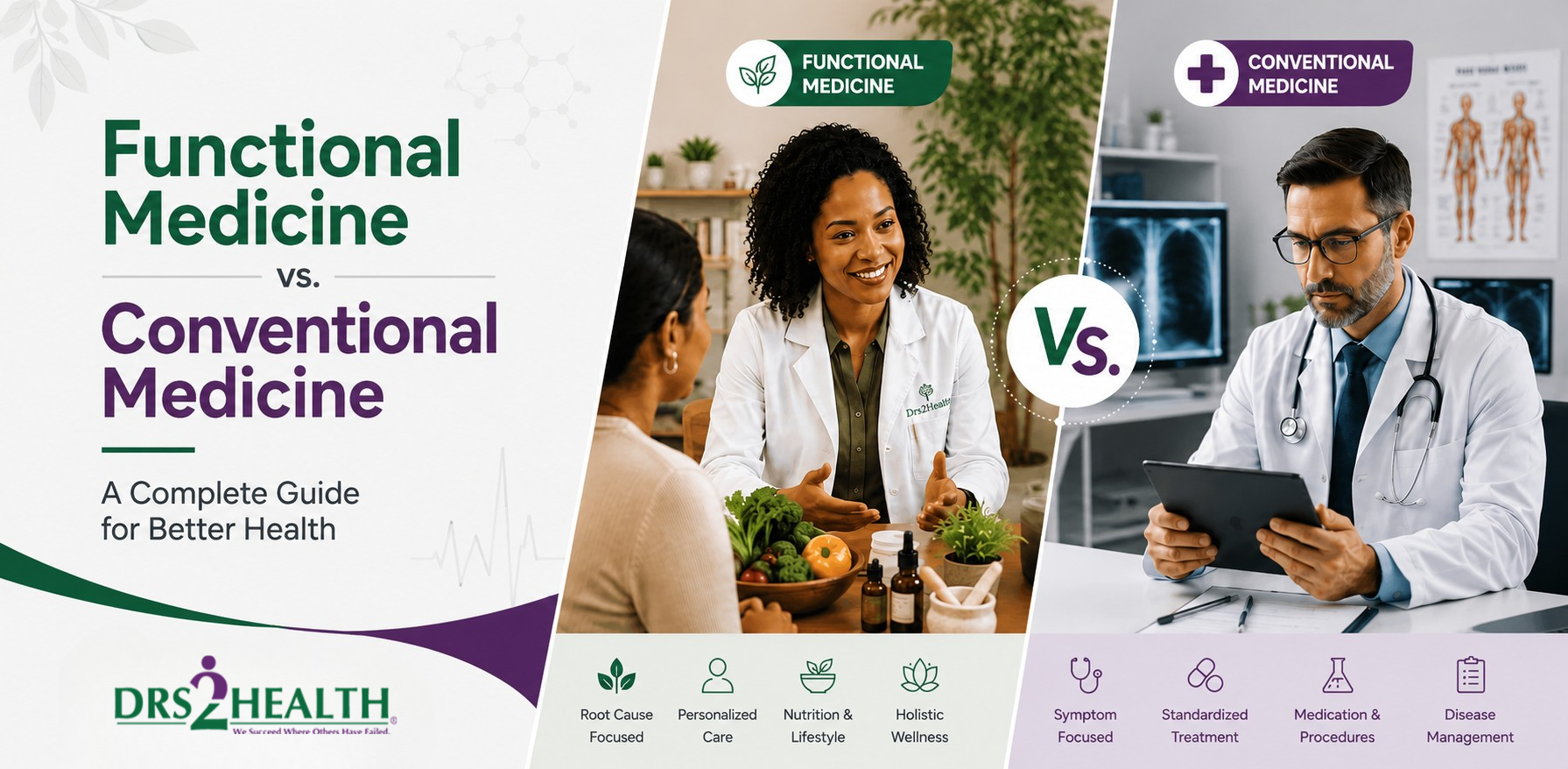
When it comes to your health, choosing the right type of care can feel overwhelming. If you’ve searched for “functional medicine vs. conventional medicine,” you’re probably wondering whether one approach is better than the other—or whether they can work together.
The truth is that both approaches play valuable roles in healthcare. Conventional medicine excels in emergency care, surgery, and acute illness, while functional medicine focuses on identifying and addressing the underlying factors that may contribute to chronic health concerns.
At DRS2Health, we believe healthcare should be personalized, evidence-informed, and focused on helping patients achieve long-term wellness rather than simply managing symptoms.
Understanding the differences between these two approaches can help you make more informed decisions about your health.
Quick Answer
Functional medicine focuses on identifying and addressing the underlying factors contributing to illness through personalized care, nutrition, lifestyle changes, and whole-body wellness.
Conventional medicine primarily diagnoses diseases and treats symptoms using medications, medical procedures, surgery, and evidence-based clinical interventions.
Rather than competing, these two approaches can often complement one another depending on a person’s health needs.
What Is Conventional Medicine?
Conventional medicine, often referred to as Western medicine or allopathic medicine, is the healthcare system most people are familiar with. It is designed to diagnose, treat, and manage diseases using scientifically validated medical practices.
This approach is particularly effective for:
- Emergency medical care
- Broken bones and injuries
- Infections
- Surgery
- Heart attacks
- Stroke
- Severe allergic reactions
- Acute illnesses
Conventional healthcare providers may use tools and treatments such as:
- Physical examinations
- Blood tests
- Imaging tests
- Prescription medications
- Vaccinations
- Surgical procedures
- Evidence-based treatment guidelines
Conventional medicine has dramatically improved life expectancy and remains essential for acute, serious, and life-threatening medical conditions.
What Is Functional Medicine?
Functional medicine looks beyond a diagnosis to understand why symptoms may be occurring.
Instead of only asking:
“What disease does this patient have?”
Functional medicine also asks:
“What factors may be contributing to this person’s health concerns?”
Functional medicine considers how different systems and lifestyle factors interact, including:
- Nutrition
- Digestive health
- Hormonal balance
- Stress
- Sleep quality
- Exercise and movement
- Environmental exposures
- Genetics
- Metabolic health
Rather than taking a one-size-fits-all approach, functional medicine develops personalized care plans based on an individual’s health history, symptoms, lifestyle, and personal wellness goals.
Learn more about our personalized care philosophy on the How We Treat page.
Functional Medicine vs. Conventional Medicine: Side-by-Side Comparison
| Functional Medicine | Conventional Medicine |
|---|---|
| Explores underlying contributors and root causes | Focuses on diagnosing diseases and conditions |
| Uses personalized care plans | Often follows standardized treatment guidelines |
| Takes a whole-body approach | Often takes a disease-specific approach |
| Emphasizes prevention and long-term wellness | Emphasizes diagnosis and treatment |
| Places nutrition and lifestyle at the center of care | Frequently uses medication and medical procedures |
| Often includes longer consultations | Appointments may be shorter and condition-focused |
| Encourages a collaborative patient-provider relationship | The physician often directs treatment |
| Considers environmental and lifestyle influences | Primarily evaluates medical findings and symptoms |
| Encourages sustainable lifestyle changes | Often addresses immediate medical concerns |
Both approaches have important strengths, and many patients may benefit from using them together.
Understanding the Difference With an Example
Imagine two people visit a healthcare provider because they have been feeling constantly tired.
How Conventional Medicine May Approach Fatigue
A conventional healthcare provider may:
- Order blood tests
- Evaluate thyroid function
- Check iron and vitamin levels
- Rule out infection
- Assess for an underlying medical condition
- Prescribe treatment when a diagnosis is identified
How Functional Medicine May Approach Fatigue
A functional medicine provider may also evaluate:
- Sleep quality
- Nutrition
- Blood sugar regulation
- Stress levels
- Digestive health
- Hormonal balance
- Physical activity
- Daily lifestyle habits
Both approaches offer value. Conventional medicine focuses on identifying and treating a diagnosable disease, while functional medicine may also explore the lifestyle, nutritional, hormonal, digestive, and metabolic factors influencing overall health.
When Is Conventional Medicine the Best Choice?
Conventional medicine should always be your first choice during a medical emergency.
Seek immediate medical attention for concerns such as:
- Chest pain
- Stroke symptoms
- Severe infections
- Broken bones
- Serious injuries
- Major bleeding
- Surgical emergencies
- High fever with severe illness
- Difficulty breathing
- Loss of consciousness
These conditions require urgent medical evaluation and treatment.
When Can Functional Medicine Be Helpful?
Functional medicine is often explored by people who experience ongoing symptoms or want a more comprehensive approach to wellness.
Common concerns may include:
- Persistent fatigue
- Brain fog
- Digestive discomfort
- Bloating
- Hormonal imbalance
- Chronic inflammation
- Stress-related symptoms
- Poor sleep
- Low energy
- Blood sugar concerns
- Frequent headaches
If you have already read our article on “PCOS Name Changed to PMOS?”, you may understand how hormonal and metabolic conditions can involve multiple body systems. This is one reason a personalized, whole-body approach may be valuable.
Prevention Is One of Functional Medicine’s Greatest Strengths
One of the biggest differences between these approaches is their emphasis on prevention.
Functional medicine encourages healthy habits before significant disease develops. These may include:
- Balanced eating patterns
- Regular physical movement
- Stress management
- Quality sleep
- Gut health support
- Healthy weight management
- Blood sugar balance
- Healthy aging strategies
Preventive care can support overall well-being and improve quality of life over time.
Why More People in New York Are Choosing Functional Medicine
New York is one of the busiest cities in the world.
Long work hours, daily commuting, high stress, limited sleep, irregular meals, and limited time for self-care can all affect overall health.
Many people are now looking for healthcare that does not simply address symptoms but also considers the factors influencing long-term wellness.
At our Wellness Center in NYC, we work with patients seeking personalized strategies that fit their lifestyle, health history, and wellness goals.
The Role of Nutrition in Functional Medicine
Food plays a significant role in overall health.
Rather than focusing only on restrictive diets, functional medicine encourages balanced nutrition tailored to individual needs.
Areas commonly discussed include:
- Whole foods
- Fiber intake
- Healthy fats
- Lean proteins
- Hydration
- Blood sugar balance
- Anti-inflammatory eating patterns
Nutrition is considered one part of a broader wellness strategy that may also include sleep, physical movement, stress management, and digestive support.
The Importance of Gut Health
The digestive system influences more than digestion alone.
Gut health may play a role in:
- Nutrient absorption
- Immune function
- Energy levels
- Mood
- Metabolic health
- Inflammation
People experiencing digestive concerns can learn more by exploring the conditions listed on our What We Treat page.
You may also find our related article about stress and digestive health helpful for understanding how emotional stress can influence the digestive system.
Can Functional Medicine and Conventional Medicine Work Together?
Yes. Functional and conventional medicine can often work together.
Many healthcare professionals believe an integrated approach may provide valuable support depending on the patient’s needs.
For example:
- Conventional medicine may diagnose and stabilize an illness.
- Functional medicine may support nutrition, lifestyle, prevention, and long-term wellness.
Patients do not necessarily have to choose one approach over the other.
Instead, conventional and functional medicine may complement one another as part of a coordinated healthcare plan.
Is Functional Medicine Evidence-Informed?
Functional medicine incorporates many evidence-informed principles, including:
- Nutrition science
- Lifestyle medicine
- Exercise recommendations
- Sleep optimization
- Stress management
- Preventive healthcare
Healthcare decisions should always be made in consultation with qualified professionals who understand each patient’s medical history, symptoms, individual circumstances, and health goals.
How DRS2Health Takes a Personalized Approach
Every person has a unique health story.
Our team takes time to understand:
- Medical history
- Lifestyle habits
- Nutrition
- Stress levels
- Sleep quality
- Physical activity
- Current symptoms
- Personal health goals
This information helps us create individualized wellness plans designed to support overall health.
Meet our experienced Naturopathic Doctors in NYC to learn more about our patient-centered approach.
Choosing the Right Healthcare Provider
When selecting a healthcare provider, consider the following:
- Professional qualifications
- Relevant experience
- Clear communication
- Personalized care
- Evidence-informed recommendations
- Willingness to listen
- A focus on long-term partnership
A provider who understands your goals and takes time to answer your questions can make a meaningful difference in your healthcare journey.
Learn more about our philosophy and patient-centered care on the About Us page.
Frequently Asked Questions
Is functional medicine the same as naturopathic medicine?
Not exactly. Functional medicine and naturopathic medicine are different disciplines, although they share several principles. Many naturopathic doctors incorporate functional medicine concepts into patient care.
Does functional medicine replace conventional medicine?
No. Functional medicine is generally intended to complement conventional healthcare rather than replace emergency care, medical diagnosis, medication, surgery, or other necessary treatments.
Is functional medicine only for chronic illness?
No. Many people explore functional medicine for preventive care, healthy aging, lifestyle improvement, and overall wellness.
Is functional medicine covered by insurance?
Insurance coverage varies depending on the healthcare provider, insurance plan, location, and services received. Patients should confirm coverage directly with their insurance provider.
Can I use functional and conventional medicine together?
Yes. Many patients use conventional medicine alongside functional medicine as part of an integrated healthcare plan.
Who may benefit from functional medicine?
People interested in preventive care, lifestyle optimization, whole-body wellness, or understanding factors that may contribute to ongoing health concerns often explore functional medicine.
Final Thoughts
There is no single healthcare approach that fits everyone.
Conventional medicine has transformed healthcare through life-saving treatments, emergency care, advanced diagnostics, medications, and surgical innovations.
Functional medicine offers a broader perspective by exploring how nutrition, lifestyle, stress, sleep, metabolism, digestive health, and other factors may influence long-term well-being.
Rather than asking which approach is “better,” consider which approach—or combination of approaches—is most appropriate for your current health needs.
At DRS2Health, we believe healthcare should be collaborative, personalized, and focused on helping people feel their best today while supporting healthier tomorrows.
Whether you are exploring preventive care, looking for answers to ongoing health concerns, or seeking a more comprehensive wellness strategy, our team is here to support you.
Take the Next Step Toward Personalized Wellness
Schedule a consultation with DRS2Health to discuss your symptoms, health history, lifestyle, and long-term wellness goals.
Disclaimer: This article is intended for educational purposes only and should not be considered medical advice. Always consult a qualified healthcare professional regarding your personal health concerns, diagnosis, or treatment options.

Dr. Dorette Lewis-Senior, ND, is a naturopathic doctor at DRS2Health in New York. She focuses on holistic and personalized care, helping patients address the root causes of health concerns through naturopathic medicine, nutrition, and lifestyle support.