
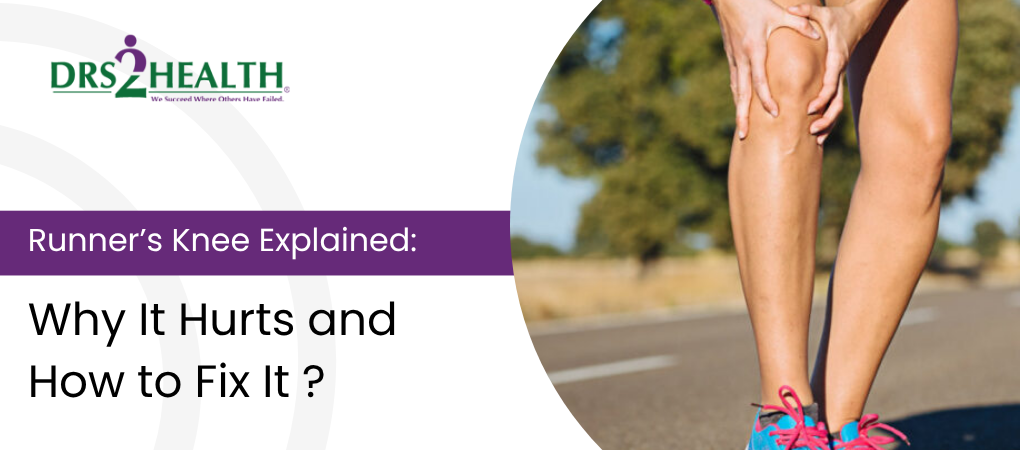
If your knee starts to ache every time you run, climb stairs, or even sit for long periods, you’re not alone. That dull, persistent pain around or behind your kneecap could be Runner’s Knee, also known as Patellofemoral Pain Syndrome (PFPS).
It’s one of the most common running-related injuries, but it doesn’t just affect runners. Anyone who puts repetitive stress on their knees can develop it. The good news? With the right care and awareness, you can recover and get back to moving pain-free.
Let’s understand what causes it, how to treat it, and when to seek help.
What Exactly Is Runner’s Knee?
Runner’s Knee refers to pain in the front of the knee, around or behind the kneecap (patella), where it meets the lower end of the thigh bone (femur). This area absorbs a lot of pressure during activities like running, squatting, or climbing stairs.
When the kneecap doesn’t move properly in its groove or when the surrounding muscles are weak or imbalanced, it leads to friction and irritation, causing that familiar, nagging discomfort.
Common Causes of Runner’s Knee
Multiple factors can contribute to the pain. Here are the most common:
-
Overuse: Repetitive bending or impact from running, cycling, or jumping
-
Weak Muscles: Especially in the hips, thighs, or core, which affects knee alignment
-
Improper Footwear: Worn-out or non-supportive shoes that strain the knees
-
Poor Running Form: Misalignment or uneven weight distribution while moving
-
Previous Injuries: Old sprains or imbalances that never fully healed
Understanding the cause helps you treat it effectively instead of just masking the pain.
Symptoms to Watch For
You might have Runner’s Knee if you experience:
-
Dull pain around or behind the kneecap
-
Pain when running, squatting, or going up or down stairs
-
Discomfort after sitting for long periods
-
Mild swelling around the knee
-
A popping or grinding sensation when bending the knee
If these symptoms sound familiar, it’s time to give your knees the rest and attention they deserve.
Treatment You Can Try at Home
For most people, early management makes a huge difference. Here’s what you can do:
-
Rest: Give your knees a break. Avoid running or heavy squats until the pain improves.
-
Ice Therapy: Apply ice for 15–20 minutes, especially after activity, to reduce swelling.
-
Gentle Stretching: Focus on hamstrings, calves, and quads to relieve tightness.
-
Supportive Footwear: Choose cushioned, stability-based shoes or use orthotic inserts.
-
Compression & Elevation: Helps minimize swelling and support recovery.
Most importantly, avoid pushing through pain. That only delays healing.
When to Seek Professional Help
If your pain persists for more than a few weeks, worsens with activity, or starts limiting your movement, it’s time to consult a professional.
At DRS2Health, our physiotherapy and sports medicine specialists assess your gait, muscle strength, and alignment to identify the root cause. With a personalized rehabilitation plan, we help you restore balance, build strength, and prevent future flare-ups.
Ignoring it can turn a simple irritation into chronic pain, but addressing it early ensures faster recovery.
How to Prevent Runner’s Knee
Prevention starts with strengthening and awareness. Follow these habits:
-
Warm up and stretch before any physical activity
-
Strengthen your hips, glutes, and quadriceps
-
Increase mileage or workout intensity gradually
-
Maintain healthy body weight to reduce pressure on joints
-
Practice good posture and running form
A few mindful adjustments can protect your knees for years to come.
Take the First Step Toward Pain-Free Movement
Your knees carry you through every stride, climb, and squat. Take care of them before pain slows you down.
If you’re dealing with recurring knee discomfort or stiffness, book a knee assessment at DRS2Health today. Our expert team will guide you with tailored treatment, posture correction, and recovery strategies to keep you active safely.
DRS2Health — Helping You Move Better, Live Stronger.